Boeing 787-9 Dreamliner
Wide-body, long-range, twin-engine commercial jet
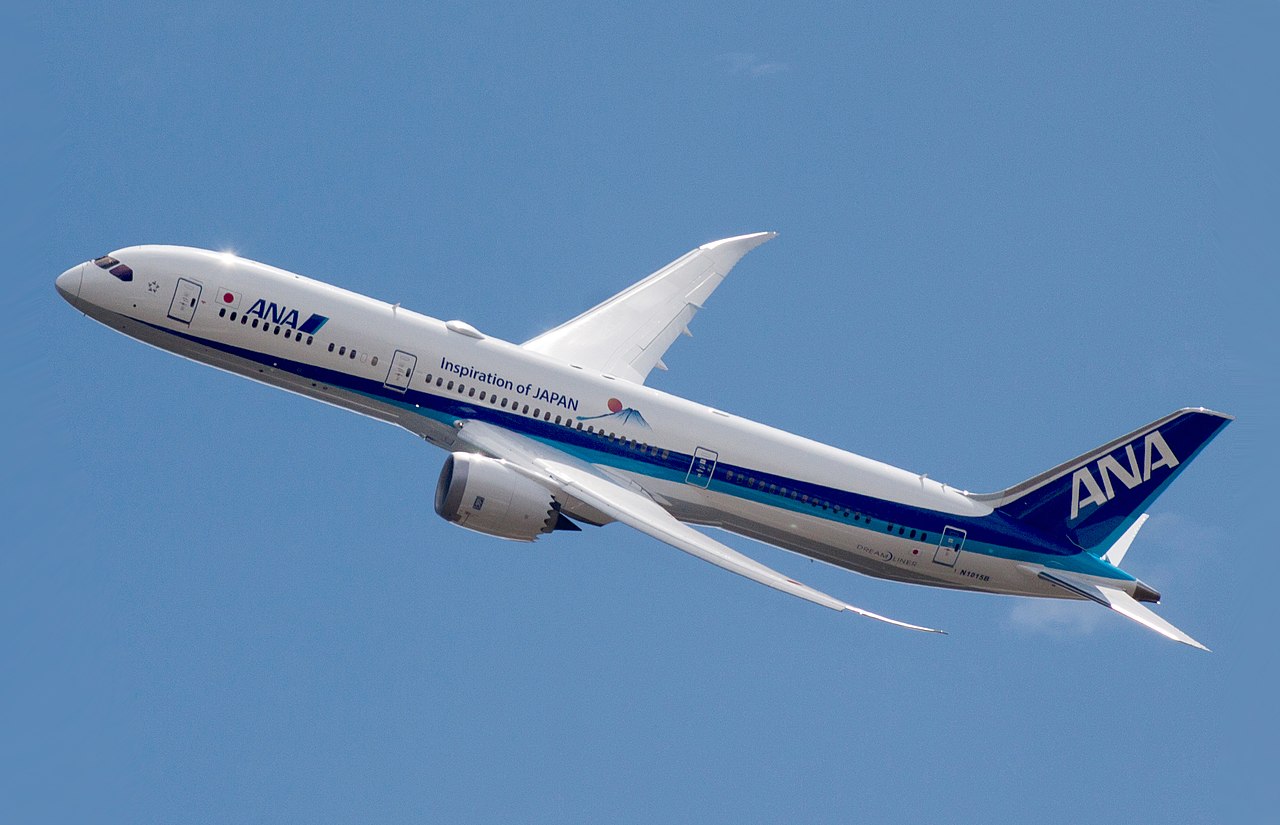
The Boeing 787-9 is the stretched, longer-range middle variant of the 787 Dreamliner family. Six metres longer than the -8, it carries roughly 40 more passengers up to 14,000 km — the workhorse of the modern long-haul fleet for airlines like ANA, United, Air Canada, and Qantas.
Specifications
| First flight | 2013-09-17 |
|---|---|
| Entered service | 2014-08-07 |
| Production | 2013–present |
| Crew | 2 (flight deck) |
| Capacity | 248 (3-class) to 296 (2-class) |
| Length | 0 m |
| Wingspan | 0 m |
| Height | 0 m |
| MTOW | 0 kg |
| Max speed | 0 km/h |
| Cruise speed | 0 km/h |
| Range | 0 km |
| Service ceiling | 0 m |
| Engines | 2 × General Electric GEnx-1B or Rolls-Royce Trent 1000 |
Fly it yourself
Which simulator handles this aircraft well, what to install, what it'll cost. Curated by an aerospace engineer who actually flies it.
Microsoft Flight Simulator
Kuro 787 is the standout freeware option — surprisingly detailed cockpit and systems. Horizon Simulations 787 is the payware step-up with better systems depth.
X-Plane 12
Long-running, well-maintained 787 family for X-Plane. Active development, regular updates. Includes -8, -9, and -10 variants.
PRINT Boeing 787-9 Dreamliner
Take it home
Precision blueprint of the Boeing 787-9 Dreamliner, drawn from primary spec data. Available as digital download (print at home) or print-on-demand.
Releasing as part of the launch series. Want to be notified?
History
Boeing launched the 787-9 in 2005 alongside the original 787-8 program. Air New Zealand was the launch customer, taking delivery of the first 787-9 in July 2014. By the mid-2020s the -9 had become the most-ordered 787 variant, with airlines preferring its better trip economics over the smaller -8. The aircraft enabled point-to-point routes that would have been uneconomic on a 777 — Perth to London nonstop, Auckland to Doha, San Francisco to Singapore.
Design
Like the rest of the 787 family, the -9 is built around an all-composite barrel fuselage and wing, replacing the aluminum construction of earlier widebodies. This permits a higher cabin altitude pressurization (6,000 ft equivalent vs 8,000 ft on aluminum jets), larger windows with electronic dimming, and a humidity level kept higher because composite doesn't corrode. The raked wingtips reduce induced drag instead of using winglets. Bleedless engines feed an all-electric architecture for cabin pressurization, anti-ice, and other systems.
Variants
- 787-9 (passenger, baseline)
- 787-9ER (extended range)
- BBJ 787-9 (Boeing Business Jet, VIP configuration)
Notable operators
- All Nippon Airways (ANA)
- United Airlines
- Qantas
- Air Canada
- British Airways
- Etihad Airways
- American Airlines
- KLM
Notable
The 787 program kicked off the modern long-thin route revolution. The -9 specifically enabled Qantas's Project Sunrise studies and currently flies the world's longest scheduled route segments outside the A350-900ULR. The composite fuselage was a step-change for commercial aviation — risky enough that early production saw multiple delays and a 2013 grounding over lithium-ion battery thermal events.
See also
Sources
Last updated: 2026-05-06